


Posted by:
Category:
Comments:
Post Date:
Energy Data Loggers Explained: How to Pick a Meter That Actually Records Your Consumption (UAE Buyer’s Guide 2026)
Why an energy meter is not enough anymore
Ten years ago, a panel-mounted kWh meter was all a facility needed. It sat inside the LT panel, showed a number, and once a month somebody wrote that number into a spreadsheet.
That model is broken today. If you run a factory, a data centre, a hotel, a cold store, a labour camp, a school, or even a mid-sized villa complex in the UAE, three things have changed:
- Tariffs are time-of-use. DEWA, SEWA, FEWA and ADDC are all steadily moving toward slab and time-based tariffs. Reading the meter once a month tells you nothing about when you consumed.
- ISO 50001 and green-building compliance (Estidama, Al Sa'fat, LEED, Dubai's Demand Side Management strategy) all require evidence, not estimates. Auditors want half-hourly load profiles, not manual logbook entries.
- You cannot fix what you cannot see. Chillers short-cycling at 2 am, a stuck contactor drawing reactive current, a lighting circuit that never switches off — none of these show up on a totalising kWh reading. They show up in the log.
That is why every serious energy meter sold in 2026 either has data logging built in, or is being replaced by one that does. This guide explains what an "energy data logger" actually is, what to look for before you write the PO, and where three real products — one power quality meter, one multi-load monitor, and one compact panel-mount unit — fit on that map.
What is an energy data logger?
An energy data logger is an electrical meter with three additional capabilities on top of measurement:
- Onboard non-volatile memory — usually flash — that stores readings even when power is lost.
- Time-stamped logging driven by a real-time clock, so every record carries a date and time.
- A way to get the data out — RS-485 Modbus RTU, Modbus TCP/IP, Ethernet, or in some cases a USB or SD card.
Some people call these devices "kWh loggers", "power loggers", "submeters with logging", or "energy analysers". The label matters less than the four questions you should be asking:
- What is it logging? Just kWh totals, or also voltage, current, power factor, harmonics, sags and swells?
- How often can it log? Every 15 minutes is table stakes. Every second is common on premium meters. Millisecond-level event capture is what separates a logger from a power quality analyser.
- How much memory? 8 MB of flash sounds tiny, but at 15-minute intervals it holds years of load-profile data.
- How do you get the data? A meter that hoards data locally with no easy export is worse than useless.
Energy data logger vs power quality meter vs multi-load monitor
These three product classes overlap, but they are not the same thing:
- A plain energy meter with logging records how much you consume and when. Good for tenant billing, sub-metering, ISO 50001.
- A power quality meter records how clean your supply is — harmonics up to the 31st or 50th order, voltage sags, swells, transients, unbalance. Essential in factories with VFDs, welding loads, or sensitive electronics.
- A multi-load monitor does the job of many meters in one device — a single unit watches four or twelve loads at once. This is the tool for panel builders, MDBs, chiller farms, and any site where you want per-circuit visibility without buying a meter per feeder.
The three products compared below cover exactly these three shapes. Pick the one whose shape matches your site.
What to look for before you buy
Whichever meter you end up with, verify these seven specs against your actual application. This is the checklist we use inside GoSwitchgear when a customer sends us a single-line diagram and asks "which meter?".
1. Accuracy class. Class 1 is fine for internal monitoring. Class 0.5S is the minimum for tenant billing or utility-grade sub-metering. Class 0.2S is for revenue-grade and high-value process loads.
2. Number of channels. One three-phase load per meter, or multiple loads per meter? A four-load or twelve-load unit costs less than four separate meters, uses one Modbus address, and saves DIN-rail space.
3. CT input type. Traditional 5A/1A secondary CTs are universal but need a shorting terminal. 100 mA and 333 mV split-core CTs (usually on an RJ12 connector) are safer, faster to retrofit, and don't need the load to be de-energised.
4. Harmonics depth. 15th order is a bare minimum. 31st order covers most VFD-heavy loads. 50th order and above starts to matter in data centres and precision manufacturing.
5. Logging memory and interval. Ask for the actual MB figure and the number of parameters it can log in parallel. "It logs" is a marketing line; "8 MB flash with time-based, event and load-profile logs" is a spec.
6. Communication. RS-485 Modbus RTU is the workhorse. Modbus TCP/IP over Ethernet is where the market is moving because it removes the RS-485 daisy-chain and integrates directly with BMS and SCADA.
7. Form factor. 96×96 mm panel-mount for MDB doors, DIN-rail for sub-distribution boards, meter-cabinet mount for tenant billing. Choosing the wrong form factor turns a good meter into a bad installation.
Meter 1 — Multispan PQM16+M1: the power quality workhorse
Best for: the main incomer of a factory, hospital or data centre where you need to diagnose problems, not just meter them.
The Multispan PQM16+M1 is a 96×96 mm panel-mount power quality meter with inbuilt data logging. It is the meter to reach for when your maintenance team keeps asking "why did the VFD trip again?" and the answer is buried somewhere in the last 48 hours of the supply waveform.
What makes it a power quality meter, not just an energy meter:
- Harmonics up to the 32nd order on both voltage and current
- True PF and displacement PF measured per phase
- Import, export and net kWh, plus reactive and apparent energy
- Real-time clock with date, so every log entry is timestamped
- Inbuilt data logging with non-volatile memory
- Accuracy class 0.5 as standard, with 0.5S and 0.2S available as options for revenue-grade billing
- 100 V to 520 kV primary voltage range (with external PTs), CT primary up to 9999 A
- RS-485 Modbus RTU plus pulse output for integration into any BMS or SCADA
- Dual LCD — a 4-digit upper display and a 9-digit lower energy counter
Where the PQM16+M1 shines: when you need one instrument to give you both the billing number (net kWh) and the forensic evidence (harmonic distortion, PF collapse, sag events) in the same log file. It fits the door of any standard 96×96 mm cut-out, so retrofitting into an existing MDB is straightforward.
Where it may be overkill: for pure sub-metering of a single tenant floor or a small chiller, you don't need 32nd-order harmonics. See Meter 3.
Meter 2 — RISH ML 1410: one meter, twelve loads
Best for: MDBs, sub-distribution panels, panel builders, tenant sub-metering, and any site where four or more separate loads need to be metered independently.
The RISH ML 1410 Multi-Load Monitor is one of the most efficient meters we sell, on a cost-per-channel basis. It measures 4 three-phase loads, or 12 single-phase loads, or any hybrid combination, all from a single 96×96 mm door-mount instrument.
Key specs:
- Up to 12 current channels and 1 three-phase voltage channel
- Active energy Class 1 as standard (IEC 62053-21), Class 0.5S optional (IEC 62053-22) — utility-grade
- Individual harmonics up to the 31st order on each phase
- Plug-and-play CTs on an RJ12 connector — split-core, no shorting terminal, no shutdown required to install
- 8 MB inbuilt flash for data logging, supporting event logging, time-based logging and load-profile logging in parallel
- Modbus RTU and Modbus TCP/IP — Ethernet built in, so it can sit directly on the BMS network without an RS-485 converter
- Big backlit LCD showing 4 parameters plus a 9-digit energy counter, with percentage-load bargraph indication per channel
- Optional relay outputs for prepaid tariff-based load disconnection, alarms, or trip signals
- Residual-current monitoring on each channel — this is unusual in a metering product and is a real differentiator for compliance with modern IEC 61439 panel-building standards
The math that makes it interesting: buying twelve single-phase meters means twelve DIN-rail slots, twelve Modbus addresses, twelve sets of CT wiring, and twelve line items in the BMS. One ML 1410 does the same job in one door cut-out, one Ethernet drop, and one line in the polling schedule. On any project with more than four sub-metered circuits, this maths out favourably before you even count the labour saved during installation.
Meter 3 — Rish Delta Energy NX (RJ12): the plug-and-play sub-billing meter
Best for: clean, low-cost sub-metering and tenant billing where the logging is done upstream — by a BMS, EMS, or SCADA polling over Modbus — and the meter itself only needs to keep an accurate running kWh count.
Not every site actually needs a data-logging meter. On many projects, the logging is already handled by a central energy management server or BMS that polls each sub-meter every few minutes and stores the history itself. In that architecture, an onboard flash log on every meter is redundant — what you need is an accurate, cheap, easy-to-install meter with a reliable Modbus output.
That is exactly what the Rish Delta Energy NX — 500 V L-L, 100 mA RJ12 input, with RS-485 + Relay (Rishabh part DE30-330101RH50000) is built for.
Key specs (from the manufacturer datasheet):
- 96×96 mm panel-mount, ~250 g, 92 mm panel cutout
- Active energy accuracy Class 1 (IEC 62053-21)
- Measures active, reactive and apparent energy, plus voltage, current, power, frequency and power factor per phase
- True RMS measurement — critical if the load contains VFDs, LED drivers, or any non-linear device
- THD measurement on voltage and current
- RJ12 plug-and-play 100 mA CT input — factory-set, with CT ratios programmable on-site from 1 A to 9999 A
- 500 V L-L system voltage
- Modbus RTU over RS-485, 2.4 k to 57.6 k baud, sub-200 ms response — included in this variant
- Relay output configurable as a pulse or alarm limit — included in this variant
- Non-volatile energy retention on power loss — the last energy count is preserved, along with min/max system V and I and runtime/interruption counters
- No onboard time-series data logging — this meter does not store load-profile or event logs internally. Logging is expected to be done by the upstream BMS/EMS via Modbus polling.
- 3-line, 4-digit red LED display with auto/manual parameter scrolling
- Impulse LED for calibration verification
Where it fits: floor sub-meters in an office tower, per-tenant billing meters in a warehouse row or mixed-use building, per-chiller and per-AHU metering in a hotel, EV charger sub-metering — any application where a central BMS or energy management server is doing the historical logging and each field meter simply needs to be an accurate, standards-compliant, plug-and-play kWh counter.
Where it is not the right meter: if you need the meter itself to store weeks of load-profile data (for standalone audits, disconnected sites, ESCO baseline studies, or ISO 50001 evidence trails where you can't guarantee the BMS was always polling), choose the RISH ML 1410 or the Multispan PQM16+M1 instead.
Side-by-side comparison
The table below is the fastest way to see which of the three is right for your job.
| Feature | Multispan PQM16+M1 | RISH ML 1410 | Rish Delta Energy NX RJ12 |
|---|---|---|---|
| Best use | Main incomer PQ analysis with logging | Multi-load sub-metering with logging | Sub-billing meter (logging done upstream) |
| Form factor | 96×96 mm panel mount | 96×96 mm panel mount | 96×96 mm panel mount |
| Channels | 1 three-phase | 4 three-phase / 12 single-phase | 1 three-phase |
| Accuracy | 0.5 (std) / 0.5S / 0.2S | Class 1 (std) / 0.5S (opt) | Class 1 (IEC 62053-21) |
| Harmonics | Up to 32nd order | Up to 31st order | THD (V and I) |
| CT input | Traditional 5A/1A secondary | Plug-and-play RJ12 CTs | Plug-and-play RJ12 (100 mA) |
| Onboard data logging | Yes — inbuilt, event capable | Yes — 8 MB flash, event / time / load profile | No — energy retention only |
| Communication | RS-485 Modbus RTU + pulse | Modbus RTU + Modbus TCP/IP (Ethernet) | Modbus RTU over RS-485 |
| Display | Dual LCD, 4+9 digit | Big backlit LCD, 4 params + 9-digit counter | 3-line, 4-digit red LED |
| Standout feature | 32nd-order PQ analysis in a metering form factor | 12 loads on one device with residual-current monitoring | Cheapest per-point plug-and-play sub-meter |
Which meter for which project?
A short decision guide, based on the projects we quote every week:
- Factory main incomer, warehouse main incomer, hospital main LT panel — go with the Multispan PQM16+M1. You want 32nd-order harmonic capture and event logging on the main.
- Chiller farm, hotel with multiple AHUs, panel builder standardising sub-metering across an MDB — go with the RISH ML 1410. One meter watches four to twelve loads, cost per channel drops dramatically, and Modbus TCP/IP puts every load directly on the BMS.
- Tenant billing in a mixed-use tower, per-floor or per-shop sub-metering, EV charger metering, any site where a central BMS or EMS is already logging — go with the Rish Delta Energy NX RJ12. Class 1 accuracy, plug-and-play CTs, and the lowest cost per point. Just remember: the meter itself doesn't log — the BMS does.
- You genuinely don't know yet — send us the single-line diagram or a photo of the panel and we'll spec it against your load and your BMS.
Buyer FAQ
Do I need an internet-connected meter, or is RS-485 enough?
For a single MDB with one BMS controller nearby, RS-485 Modbus RTU is more than enough. For a multi-panel site, a campus, or anywhere the meters and the BMS are on different floors, Modbus TCP/IP over Ethernet is dramatically easier to commission and troubleshoot.
How long can these meters store data before it wraps around?
It depends on the number of parameters and the interval. As a rough rule, 8 MB of flash logging six parameters every 15 minutes stores well over a year of data. If you poll the meter with a BMS or an energy management server, the onboard memory is really just insurance against network downtime.
Does UAE regulation require these classes of meters?
For tenant billing under DEWA and RSB rules, you must use an approved Class 1 or Class 0.5S meter with a valid calibration certificate. For ISO 50001 or Estidama compliance, the standard doesn't name a meter — it names an evidence trail, and that trail is much easier to produce with a logging meter than with monthly manual reads.
Can I retrofit these into a live panel?
The two RJ12-based meters (RISH ML 1410 and Rish Delta Energy NX) use split-core CTs that clip around the conductor without breaking it, which means you can install without a shutdown provided you follow the site's live-working procedure. The PQM16+M1 uses traditional wound-core CTs and needs the CT secondary properly shorted before you touch it.
What about calibration and warranty?
All three meters ship with manufacturer test reports. Multispan and Rishabh both back their meters with a standard warranty; recalibration is generally recommended every three to five years for revenue-grade billing meters.
Ready to specify a meter?
Every serious energy project starts with the right meter at the right point on the single-line diagram. All three meters featured here are stocked in Dubai:
- Multispan PQM16+M1 — product page
- RISH 1410 Multi-Load Monitor — product page
- Rish Delta Energy NX 100 mA RJ12 with RS-485 + Relay — product page
Browsing more? See the full Energy Data Logger range on GoSwitchgear.
If you'd like us to look at a single-line diagram before you order, get in touch with the GoSwitchgear team and we'll come back with a meter recommendation and a delivered price the same working day.
Share this post

Related
Posts
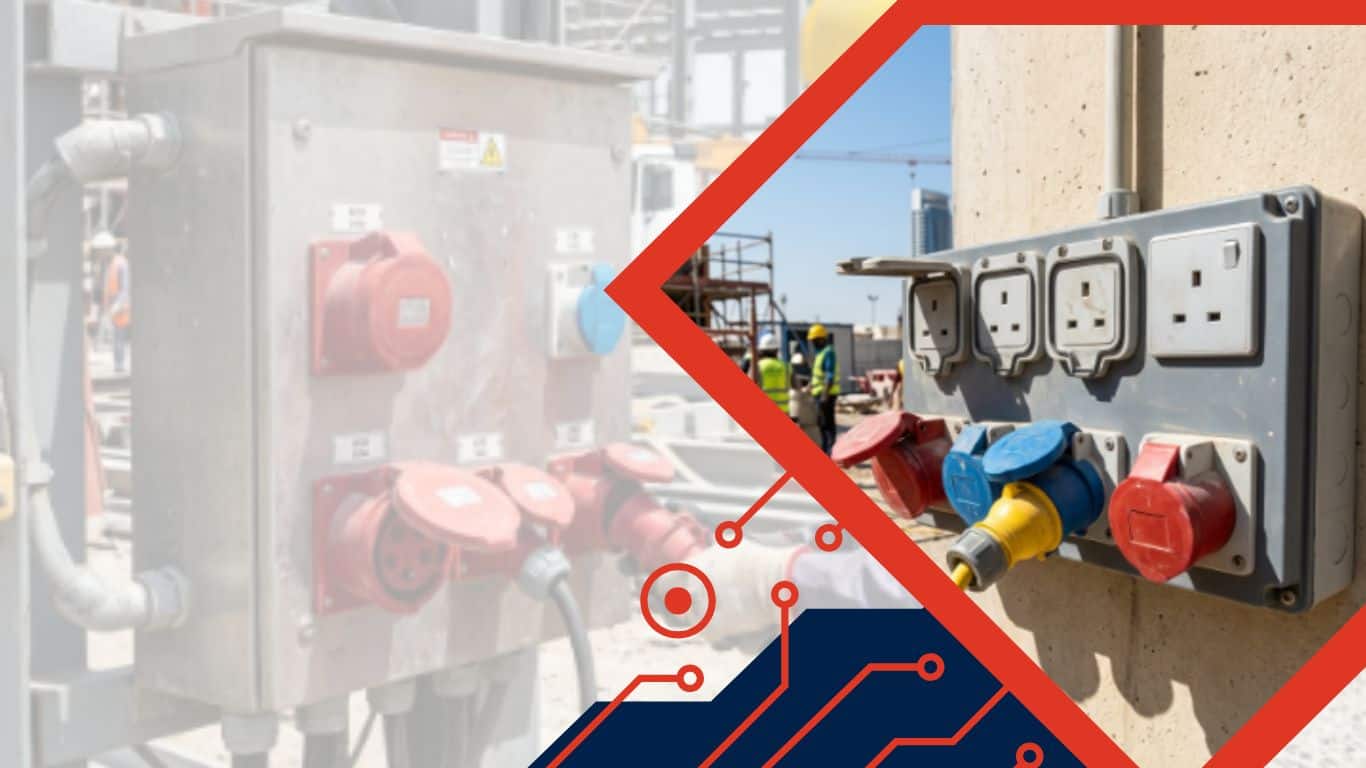
The Ultimate Guide to Industrial Panel Sockets and Wall Sockets for UAE Workspaces & Heavy-Duty Sites
A socket that works in a clean office may fail quickly on a workshop floor, generator panel, warehouse loading bay,...

Wire Connectors for Downlights & LED Strips: A UAE Fit-Out Guide (2026)
Which KableKonnect PCT connector for downlight chains, driver-fed clusters, LED strip runs and ceiling roses. Featuring the SPL deconcentrator range...
Electrical Wire Connectors in Dubai: A Panel Builder’s Sourcing Guide (2026)
What actually costs what for electrical wire connectors in Dubai — WAGO vs KableKonnect PCT alternatives, MEP spec compliance routes,...
WAGO 221 vs WAGO 222: Which Lever Wire Connector Do You Need? (2026 UAE Guide)
The 221 splices multiple wires from one side. The 222 passes a run through, in on one edge, out the...
.jpg)